
An internship is in it’s most basic principle, is a learning program provided by someone exterior to your normal educational institutes—paid, or more commonly, unpaid.
To leave your normal environment and learn from another – most likely working professional – seems like an idilic way to ditch powerpoint slides and literature reviews. Travelling to foreign cities and making endless connections, it’s pretty neat really; especially when you go somewhere cool like Stockholm. (I reference there because I did that, look at me, look how cool I am. Please.)
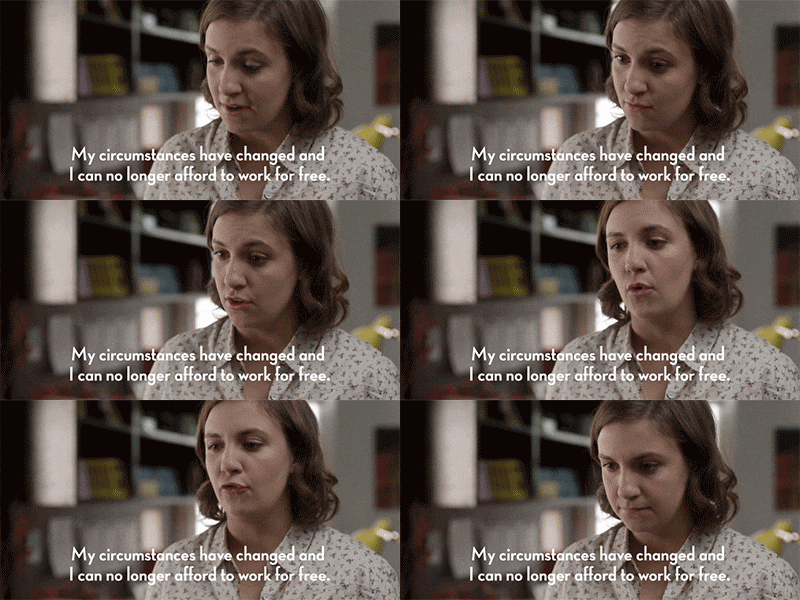
The only problem is, you might not be paid for this opportunity. As I see it, this is fair enough, a door has opened that was not previously so accessible as it is now and unlike any education you’ve encountered so far, neither yourself nor the government are paying for the tutoring you’ll receive. But wait—if you are working free of charge, is it not possible that they are also gaining quite heavily from your learning experience with them? Smells a little like exploitation, if my senses don’t fail me.
When anyone speaks of internships, you’re never far from the term exploitation. Though to work for free isn’t directly exploitation, in the case of internships it certainly toes the line. The question is, how long are you working for and what is the ‘work’ that you are doing, because exploitation is heavily defined by expectation and understanding of the situation. Internships are a charity of education, and charity in all sense is dependant on position; offering to work gratis is rather opposite to be asked (or even made) to work for no pay.

Let me not discount all internships just yet, though it’s likely you’ll not be paid; it is also possible you could be paid, real money into your real pocket. The dream come true, to be paid to learn—only problem is, you’re rather likely to not be paid any good amount of money because you’re not officially an employee.
As an employee, you are paid for your responsibilities, knowledge and ability to work your role harmoniously in the given workplace; that along with contributing to tax and other local costs. Being an intern means you haven’t any employed rights or responsibilities, so clearly the amount paid would reflect the temporary position you uphold. It’s a confusing situation as you’ll often fulfil the roles of an employee without the benefits or restrictions that those working around you will have.
As far as internships go, I have personal experienced two unpaid 2-week positions that I would sing the praises of, but even just these two weeks were bolstered by the fact I had the ability to just about scrape by with savings and donations. The learning and experiences I got from these two short stints of time has been invaluable for me, but even now I’m still paying back a student overdraft; the remaining debris of ambition.
Even thriving in past wage-free internships hasn’t swayed my mind on how they operate and exist. I can see how easily a person can be exploited through an internship as unlike an employed position, there isn’t usually any legislation or terms to define what can and cannot be encompassed into the role of an ‘intern’. I’m certain if someone can justify picking up the CEO’s lunch as a learning experience, then you could easily find yourself sandwiches-in-hand most afternoons.

I have read studies claiming that internships lead to careers at roughly a 70% success rate but I have neither linked them nor based my argument on them here because they weren’t prevalent to the creative industry or even Europe—not to mention that they were co-funded by enormous names in right wing capitalist businesses that would certainly squeeze a little benefit from telling the exploitable that being exploited could be good for them.
So to now ignore studies, I have only my own personal experience and opinion to fall upon—how professional of me ey? Well, here is where I stand in the tennis court of internships. For me, they were something proudly displayed on my CV and taught me many ‘working’ strategies for non-design problems, which end up being very useful whether you notice them at the time or not. They also scared the hell out of me; a bucket of ice water in my pleasant warm tub of comfortable practice as a design student.
I also saw around me, those who sought the internships were also those who produced better work and sourced better jobs post-university. This was not a direct result of any unpaid time they spent anywhere but merely a catalyst for their hunger to learn; there is something endearing about choosing to learn over a life-time of crippling debt. Principally there are two things that saying yes, will grant you over saying no—firstly you’ve said yes, so you’ll have a much more exciting time than saying no but also for better or worse, you’ll make connections.
I’ve previously argued the differences of who you know versus what you know, but whatever the outcome is you’ll make connections, good or bad, it’s more than what would have happened had you not seized the opportunity.
I won’t say whether you should or should not do an internship, paid or unpaid; because I would put all my papers into the ballot of banishing unpaid internships despite doing multiple myself. It’s all perspective and availability, if you can afford to work for free it could be great for you but terrible for the industry and those who follow behind you in it, perpetuating the current model. Just think about it my dudes.
